
GEORGE TOWN: Police failed to properly investigate whether others were involved in the disappearance and death of Australian national Anna Jenkins, according to the full grounds of judgment released recently.
High Court judge Rofiah Mohamad said police treated the case only as a missing person’s investigation and did not investigate possible crimes such as kidnapping or wrongful detention.

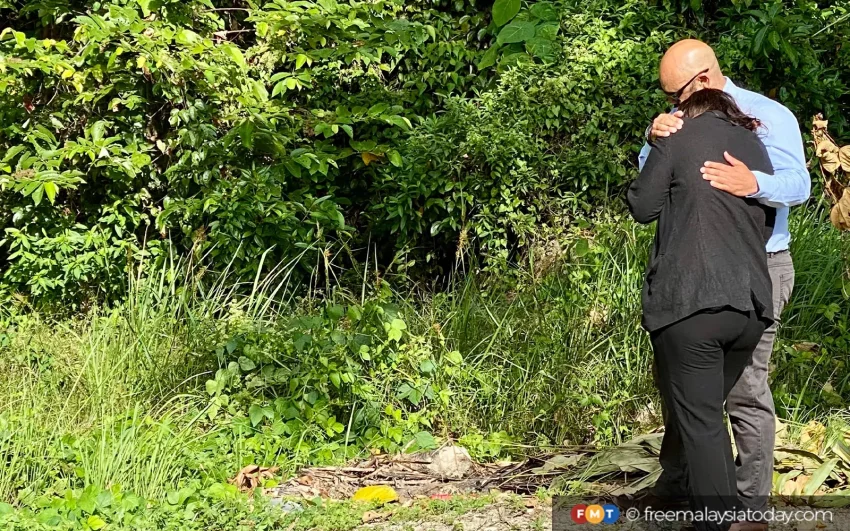
Parit Buntar-born Jenkins, 65, disappeared while visiting Penang with her husband in December 2017. Her remains were found almost three years later at a secluded area near the Penang Turf Club at Scotland Road.
Rofiah said the discovery of Jenkins’s remains at an unusual location, together with a defect found on one of her bones, should have provided a “fresh lead” for police to investigate possible foul play.
However, she said, no such investigation was carried out before the inquest ended.
“It is, therefore, unsurprising that no such evidence could be adduced at the inquest,” she said.
Rofiah also highlighted Jenkins’s final phone call to her husband, during which she reportedly said two unidentified Ukrainians had detained her and asked for her passport.
She said police conducted “no investigation whatsoever” into whether the two people existed or whether they had any role in Jenkins’s disappearance or death.
She also questioned the original classification of the case, saying police had apparently not recorded a full statement from Jenkins’s husband before beginning investigations, despite it being compulsory to do so.
The judge said the inquest into Jenkins’s death was premature because the investigation had not properly examined possible criminal involvement.
She said the open verdict itself was “in reality, also premature”.
Coroner Norsalha Hamzah had returned an open verdict in May 2023, meaning there was insufficient evidence to determine how Jenkins died or whether anyone was criminally responsible.
Rofiah upheld the verdict, saying the court could not record a homicide finding based only on suspicion.
“However strong the grounds for a suspicion may be, it remains not a proven fact,” she said, adding that evidence was needed to show who was involved and how that involvement caused Jenkins’s death.
Rofiah ruled out natural death, suicide, and an accident. She said Jenkins was healthy, showed no signs of wanting to take her own life, and was unlikely to have entered the forested area where her remains were found on her own.
Jenkins’s son, Greg, had appealed against the High Court decision before the full grounds were released.
The Court of Appeal had postponed the hearing pending the written grounds.
Rofiah said the investigation could continue and the inquest could be reopened if new evidence emerged.
She said pursuing the investigation “remains a responsibility that must be fulfilled”.