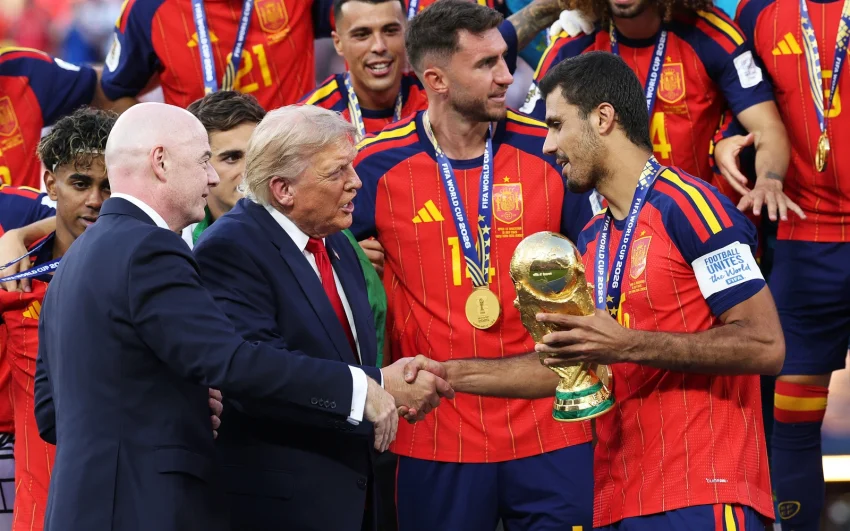

ZURICH: Fifa president Gianni Infantino has hit back at critics of the World Cup, accusing them of spreading hate and false narratives while defending the tournament as a success that celebrated unity, safety and inclusion.
In an open letter published on Monday, Infantino, 56, said detractors had overlooked the joy and togetherness experienced by millions of fans around the world who witnessed the tournament, won by Spain and staged across the US, Canada and Mexico.
“You were so consumed by hate and criticism that you missed it all,” he said.
“To those behind their pens and papers, behind their screens spreading hate and false rumours, I want to say that while you are sitting behind, we at Fifa are on the front lines organising, working hard, and delivering the best show in the world.
“We experienced no violence, no incidents, 100% safety and security, only joy and happiness!,” he added.
Fifa faced criticism over a number of issues during the tournament, including debate over US visa restrictions affecting supporters and officials from several countries and concerns involving teams from conflict-hit regions.
Infantino’s letter also followed scrutiny of Fifa’s handling of the Folarin Balogun disciplinary case, a decision to suspend the automatic one-match ban imposed on him after his red card against Bosnia and Herzegovina following the intervention of US president Donald Trump.
Officiating decisions in Argentina’s match against Egypt also generated widespread debate among fans and pundits.
Though Infantino did not refer to specific cases, he argued that many of the refereeing and disciplinary decisions criticised during the tournament were commonplace in various competitions worldwide.
“Potentially mistaken red or yellow cards or subsequent decisions not to ban players in certain situations are routine and widely accepted in some of the biggest leagues worldwide,” he added.
“It’s curious that the same countries employing these practices are the ones criticising,” he added.
Visa controversies
Infantino pointed to the participation of countries facing political tensions, domestic crisis and domestic health challenges as evidence of football’s ability to transcend divisions.
While Iran’s participation came against the backdrop of conflict with the US, issues surrounding Haiti’s domestic crisis and the Ebola outbreak in the Democratic Republic of Congo also drew attention to visa and travel restrictions.
Somali World Cup referee Omar Abdulkadir Artan was barred from entering the US despite having a valid visa.
“Iran entered the US without incident or conflict. The Iranian team received visas to enter because football is about peace. It’s not about politics,” he said.
“Countries facing serious health issues or other challenges were granted visas.
“When football brought Haiti to the world, a country that many cannot or choose not to visit, it might be time to set aside your pens and keyboards and show some respect to the teams that played,” he said.