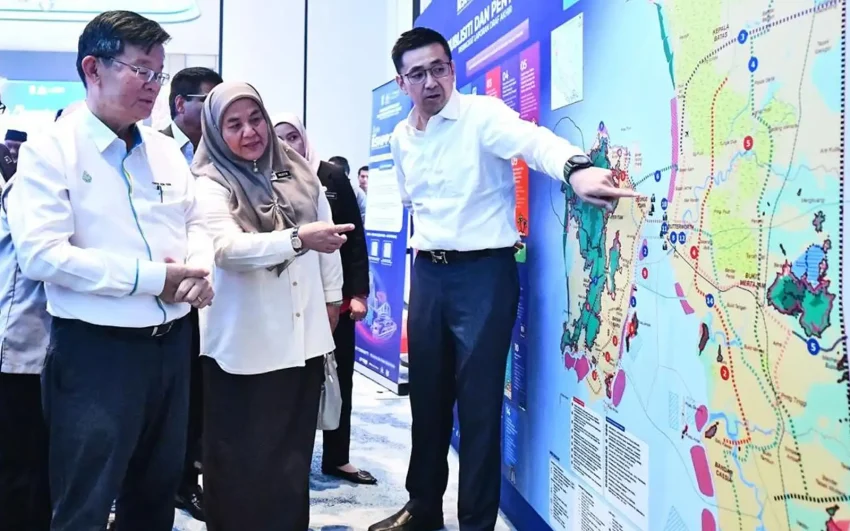

GEORGE TOWN: The proposed undersea tunnel or third bridge linking Penang island to the mainland remains part of the state’s development plan for 2040, says chief minister Chow Kon Yeow.
Speaking after the launch of the draft Penang Structure Plan 2040 today, Chow said the project remained in the draft plan as the agreement with the appointed company was still valid.
“It is still there. The agreement is still valid. We have already made the offer to the company. When it is implemented, it will follow the schedule,” he told reporters.
Chow said the projects outlined in the structure plan were only indicative and did not necessarily mean they would be built.
He said the plan was a high-level planning document, with more specific details on land use and individual lots to be set out in local plans.
Penang already has two bridges: one connecting Perai on the mainland to Gelugor on the island, and another connecting Batu Kawan to Batu Maung.
The proposed third link is part of a RM6.3 billion transport package that originally comprised the 7.2km undersea tunnel linking Gurney Drive on Penang island to Bagan Ajam on the mainland, as well as three major roads: a 10.53km road from Tanjung Bungah to Teluk Bahang, a 5.7km link from Air Itam to the Tun Dr Lim Chong Eu Expressway, and a 4.1km link from Gurney Drive to the expressway.
Of the three roads, only the Air Itam link has entered construction. Work began in 2021 and was reported to be 91% complete as of end-June, with completion expected by April 12 next year.
The third link remains under consideration, with the state studying whether a bridge would be a better alternative to the tunnel.
A feasibility study for the proposed link was completed, submitted and approved by the state government in 2023. However, the proposed alignment subsequently faced the possibility of conflict with long-term expansion plans for the North Butterworth Container Terminal.
Responding to former economy minister Rafizi Ramli’s remarks that Penang’s limited land supply was affecting its ability to raise revenue, Chow said the state would continue acquiring and opening up land for industrial and other development.
He also said that suitable rural areas would be rezoned as they became more urbanised.
“We have to work within the constraints of the state. We have our strengths and weaknesses, so we need to plan according to them,” he said.