The future of Malaysian politics appears increasingly defined by a racial and religious divide, with the political landscape split between Malay-majority coalitions and a non-Malay opposition.
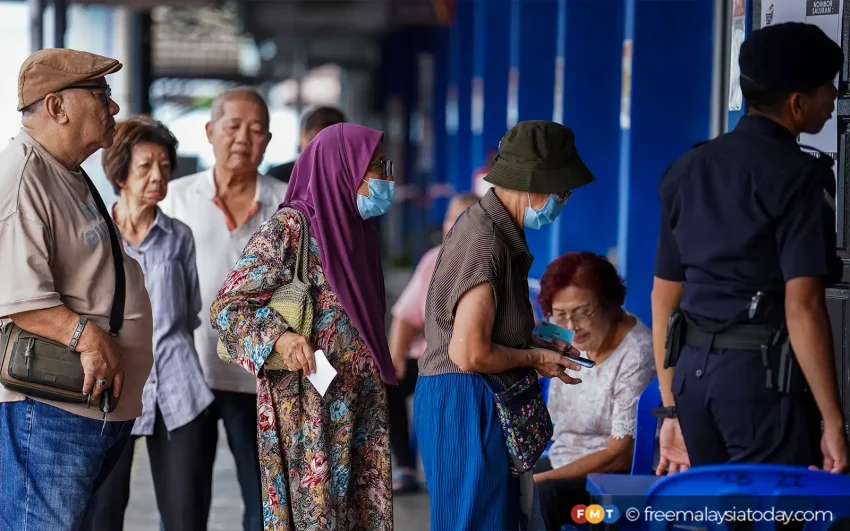
This dynamic was starkly visible in the results of the Negeri Sembilan state election on Saturday, where Perikatan Nasional and Barisan Nasional benefited greatly from the emphasis on Malay-Muslim unity and political leadership.
The voters seemed to be hardly interested in Pakatan Harapan’s campaign, which focused on governance amid rising racial tensions. No one cared that the Tabung Haji problems happened under the watch of Umno, the once dominant Malay-Muslim party.
It can be surmised that voters’ polling decisions are often dominated by immediate, tangible concerns – the state of the economy, the cost of living, national security or the promise of new social programmes.
In the Johor and Negeri Sembilan state elections, corruption took a back seat, relegated to the periphery of public consciousness. For many, the abstract notion of systemic graft or political malfeasance felt distant compared to the overwhelming race-based campaigns.
The strategy of appealing to Malay voters remains strong due to demographic realities, and political pragmatism is likely to maintain BN-PN cooperation for a long time to come..
The rhetoric of Malay unity is not new but has been intensifying. It is certain that BN will have a pact with PN at the next general election, due by end-2027 or early 2028. This narrative frames elections as contests for Malay political leadership and warns against a federal government allegedly dominated by DAP.
When this happens, this “Malay unity coalition” is likely to achieve an easy simple majority at GE16.
Political marginalisation
Chinese voters strongly backed DAP in Johor and Negeri Sembilan, or stayed away from voting. DAP may not be annihilated, but will end up as the only party in the opposition bloc after the next general election. And, unfortunately, the party may just become an entirely non-Malay entity.
For non-Malays, this trajectory raises concerns about political marginalisation. The Chinese lament of political marginalisation despite economic contributions, while Malays fear erosion of their rights and privileges.
This mutual anxiety fuels a cycle of race-religion politics that seems to have no clear endpoint. The “green wave” of Islamic conservatism and persistent Bumiputera policies risk deepening domestic divisions, as tensions grow between communities.
Some argue that the obsession with race and religion is a never-ending cycle, inherited from socio-economic conditions based on class and racial lines, leading to a growing number of extremist exchanges in the media.
In Negeri Sembilan, the racial split with opposition forces being all non-Malays could further entrench communal voting patterns. This may impact the Malaysian lifestyle by reinforcing segregated political identities, where policy debates are overshadowed by ethnic loyalty.
The call for Malay unity, however, has been met with cautions against being misinterpreted as hostility towards other ethnic communities, with PN and BN leaders calling for mutual respect. Yet, the practical effect of such rhetoric is likely to polarise the electorate.
Where will it all end?
The trajectory suggests that unless there is a fundamental shift towards issue-based politics, Malaysia may remain trapped in a cycle of racial and religious polarisation. The current coalition politics remains fluid and unpredictable, with factional rivalries and leadership struggles.
Some observers take the view that Malay unity reflects an outdated political framework increasingly disconnected from modern Malaysia, and that a mature statesman should aspire to transcend it.
However, the demographic and political incentives for Malay-Muslim-centric appeals remain powerful, suggesting that race-religion politics will persist for the foreseeable future, shaping not just elections but the daily lives of Malaysians across communal lines.
The bottom line is that we can kiss the hopes of a Bangsa Malaysia goodbye.
Editor’s note: The Negeri Sembilan election on Aug 1 ended with Barisan Nasional winning 18 seats through Umno (16) and MCA (2), while its election ally Perikatan Nasional won 7 seats through PAS (4) and Wawasan (3). Pakatan Harapan will form the opposition, having won only 11 seats (six less than in 2023) through DAP (9) and PKR (2).
The views expressed are those of the writer and do not necessarily reflect those of FMT.