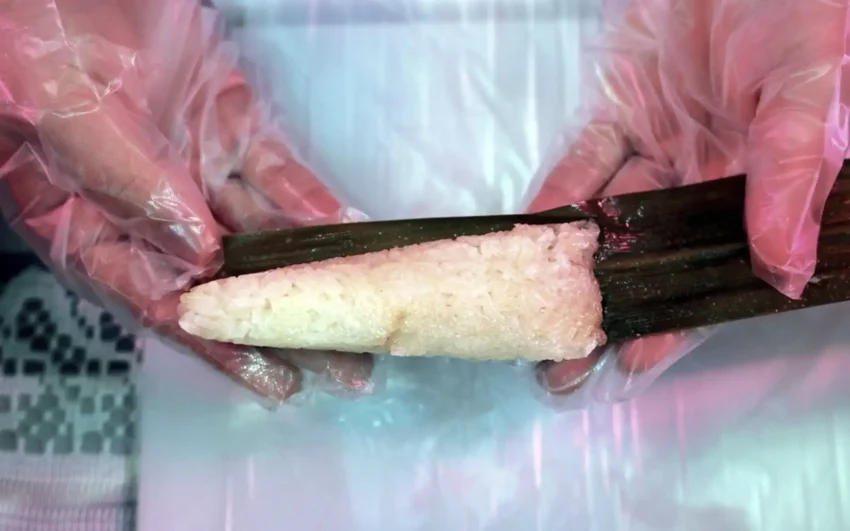

KUCHING: For many families in Limbang and Lawas, a gathering would not feel complete without kelupis on the table. Soft, rich and fragrant with coconut milk, the glutinous rice delicacy has long been served during festive occasions, family celebrations and visits from guests.
For Mayziana Matzin, it carries an even deeper meaning. The 40-year-old Kedayan from Kampung Sibukang in Limbang grew up with the flavours of northern Sarawak, and now hopes to introduce them to a wider audience.
Through her food business, she has given traditional kelupis a subtle twist by wrapping it in pandan leaves.
“Many people are only familiar with regular kelupis, whereas pandan kelupis has its own uniqueness – the leaves give it a more fragrant aroma without affecting the authentic taste,” she told Bernama.
Traditionally, kelupis is made from glutinous rice and coconut milk before being wrapped in leaves and cooked. Mayziana uses Siamese glutinous rice and freshly squeezed coconut milk, giving it a softer texture, richer flavour and brighter appearance.

Her aim is not to reinvent the delicacy, but to help more people appreciate the tradition behind it.
“I want more people to know about the traditional food of northern Sarawak, not only by enjoying it but also by understanding the heritage value behind every dish,” she explained.
Mayziana began Buffet.Lab Food Services in 2018, with pandan kelupis becoming one of its signature offerings. The response has been particularly encouraging among customers outside Limbang, including those in Kuching.
But pandan kelupis is only half the story. Its natural companion is sambal tahai, another northern Sarawak speciality closely associated with Limbang and Lawas.
Tahai is made from small coastal fish dried using sunlight and charcoal smoke, giving them their distinctive aroma and flavour. The fish is then turned into sambal using traditional methods.

Although machines could make the work faster, Mayziana continues to pound the ingredients with a stone mortar. She said the slower process helps preserve the sambal’s texture and smoky character.
According to Mayziana, pandan kelupis is best enjoyed with sambal tahai. The soft, creamy rice and gentle pandan fragrance are balanced by the smoky, salty and slightly spicy sambal.
For generations of families in northern Sarawak, the two have been served together at gatherings and celebrations.
“For the people of Limbang and Lawas, these foods are not merely dishes but a perfect pairing that serves as a symbol of heritage that must be preserved,” she added.