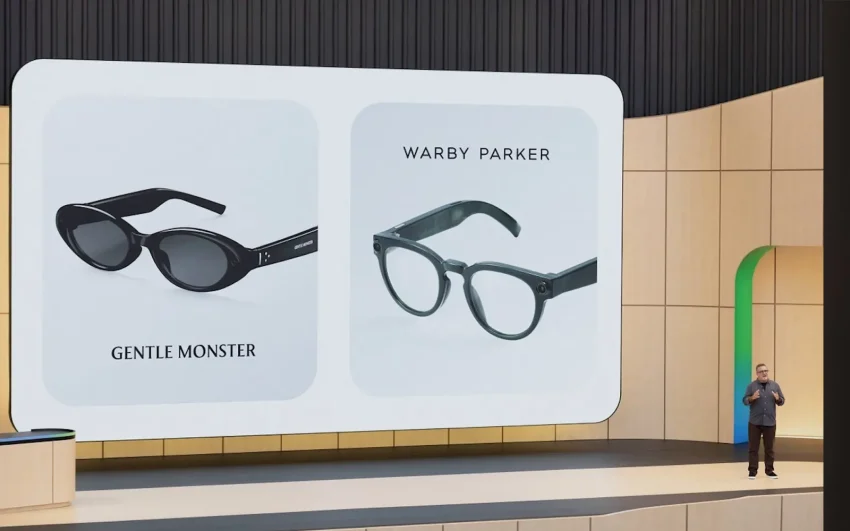

PETALING JAYA: For years, smart glasses were technology’s favourite punchline. Google Glass arrived with enormous hype in 2013, promising a future in which information appeared before your eyes. Instead, it became synonymous with privacy concerns, awkward design and unrealised potential.
More than a decade later, the tech industry believes it may finally have found the missing ingredient: artificial intelligence.
Over the past few months, nearly every major player in consumer technology has signalled renewed interest in smart glasses. Google recently showcased Android XR glasses powered by its Gemini AI assistant; Meta continues to expand its Ray-Ban smart glasses line; and reports suggest Apple is developing its own wearable eyewear.
Taken together, the developments point to a growing belief that the next major computing platform could sit on our faces rather than in our pockets.
What makes today’s smart glasses different from earlier attempts is their ability to understand the world around them. Instead of simply displaying notifications, AI-powered glasses can identify objects, answer questions about a user’s surroundings, translate languages, and provide directions through voice commands.
During Google’s recent Android XR presentation, Shahram Izadi, the company’s vice-president and general manager of XR or eXtended Reality, described the vision as creating “glasses that deliver help in the moment without taking you out of it”.
That simple phrase captures the industry’s broader ambition: making technology feel less like a device and more like an invisible assistant. Rather than reaching for a smartphone to look up a restaurant, identify a building or translate a menu, users could simply ask an AI assistant for help.
Meta has been pursuing a similar goal through its Ray-Ban smart glasses. The company has promoted the devices as a way for people to remain engaged with their surroundings rather than constantly staring at a screen.
“Glasses are the only form factor where you can let AI see what you see, hear what you hear, and eventually generate what you want to generate, such as images or video,” chief executive Mark Zuckerberg said while announcing the smart glasses in September.

Zuckerberg has repeatedly argued that glasses could eventually become people’s primary computing device, replacing many of the functions currently performed by smartphones. But not everyone is convinced.
Privacy concerns remain one of the biggest challenges, as cameras, microphones and AI systems capable of interpreting the environment raise questions about surveillance, consent and data collection.
Recent reporting by Wired highlighted concerns over facial-recognition capabilities being explored for future smart-glasses applications, reviving many of the same debates that plagued Google Glass more than a decade ago.
Meanwhile, fashion could prove just as important as technology: one reason earlier smart glasses struggled was that they looked like experimental gadgets rather than everyday accessories.
Today’s companies appear determined to avoid that mistake, which explains why Google has partnered with eyewear brands including Warby Parker and Gentle Monster.
Meanwhile, Meta’s collaboration with Ray-Ban focuses heavily on making the devices resemble ordinary glasses. After all, consumers are unlikely to wear smart glasses all day if they do not want to wear them in the first place.
Whether AI glasses ultimately replace smartphones remains uncertain; most analysts believe widespread adoption is still years away. Yet the sudden convergence of interest from these players suggests something significant is happening.
The question is no longer whether smart glasses will return. Rather, it is whether AI can finally succeed where previous generations of wearable technology failed.