
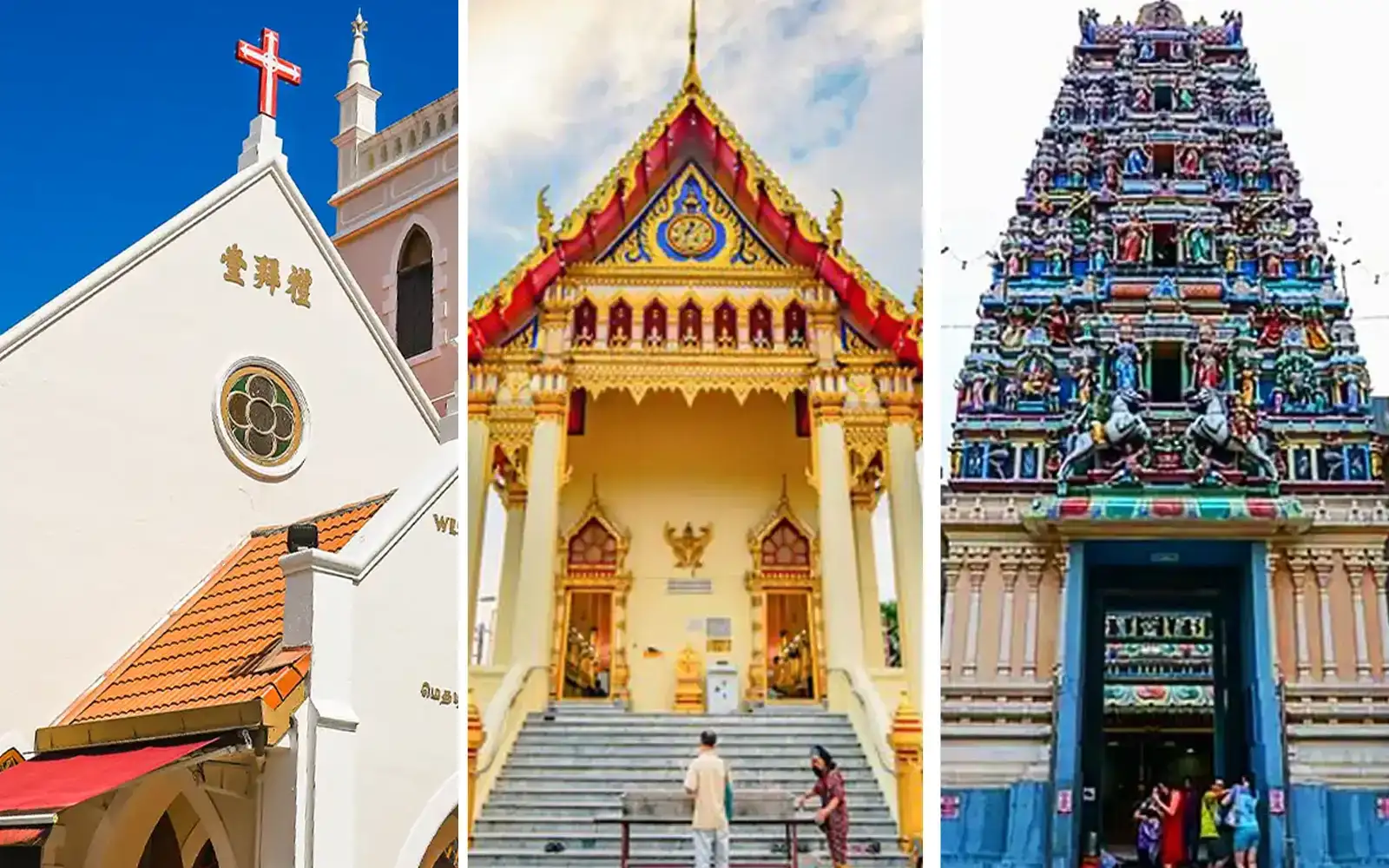
PETALING JAYA: An interfaith group has accused the Selangor government of drafting new planning guidelines and standards for non-Muslim houses of worship without consulting affected communities.
The Malaysian Consultative Council of Buddhism, Christianity, Hinduism, Sikhism and Taoism (MCCBCHST) said it was only called to a meeting on May 29 after the Selangor Community Facilities Planning Guidelines 2025 were reported in the media.
“MCCBCHST requested two weeks to provide feedback,” it said in a statement today outlining its objections to the guidelines.
Among its main concerns is a requirement that a minimum population of 5,000 residents or 1,250 housing units must be met before land is allocated for non-Muslim houses of worship, with a minimum site size of 0.6ha (1.5 acres).
It said the threshold was impractical and could exclude smaller religious communities, such as Sikhs, who are obligated to pray at a gurdwara at least twice daily.
“What happens if the population is less than 5,000? Where will they worship?” it asked.
The council proposed lowering the threshold to 1,500 residents of 374 units, which it described as an international planning standard, while maintaining 0.6ha minimum land size scaled for larger developments.
It also opposed provisions barring places of worship in commercial zones, as well as restrictions on converting existing buildings into worship spaces, and using residential units for religious purposes.
It said there were no reasons to discontinue the current practice of using commercial zones, especially when land for non-Muslim houses of worship was limited.
MCCBCHST also criticised the 21.9m (72ft) height cap and mosque-height benchmark, saying religious buildings should be allowed an appropriate height for architectural features, such as domes, sculptures, or towers, if surrounding buildings were taller.
“The restriction that (such) buildings cannot exceed mosque height may contradict Articles 3(1), 8, and 11 of the Federal Constitution,” it said.
MCCBCHST proposed increasing the minimum parking allocations from 10,000 sq ft to 15,000 sq ft following household car ownership patterns.
It also claimed that more than half of its recommendations given during earlier PLANMalaysia consultations in 2020 and 2021 were not included in the final guidelines.
Citing constitutional provisions on freedom of religion, it said all faiths should be treated equally in planning policies.
“While mosques and suraus are widely provided across the country, including commercial and industrial areas, MCCBCHST requests that similar provisions be extended to (non-Muslim houses of worship),” it said.
The guidelines were approved twice by the state excecutive committee in November last year and first came to light after Petaling Jaya MP Lee Chean Chung raised concerns on May 23.
The state government subsequently announced the guidelines had been put on hold pending a review, and no enforcement action would take place in the meantime.