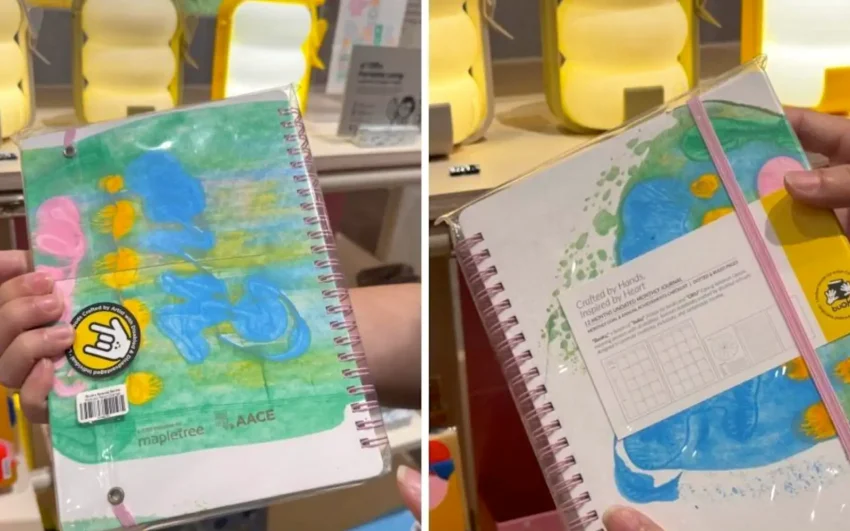

KUALA LUMPUR: A stack of old newspapers may not look like much. But at a workshop in Salak South here, these discarded pages are soaked, pulped and transformed into paper before finding a new life as notebooks, greeting cards and other handcrafted products.
Nearby, used cosmetic bottles that might otherwise end up in the rubbish bin are turned into 3D-printed lamps and keychains.
Behind many of these creations are adults with disabilities and senior citizens involved in Goods for Good, a social enterprise run by the Association of Art in Charity and Education for Disabled and Disadvantaged (AACE).
The initiative combines creativity, sustainability and income-generating opportunities, while proving that waste materials can become something valuable in more ways than one.
“We collect paper from printing companies that would otherwise be discarded. We then recycle the materials to produce handmade paper,” AACE production management team leader Lem Choy Yen told Bernama.
Every day, participants gather at the centre to sort, process and craft the materials into products that will be sold at locations such as Central Market, Loka Made, Ilham Gallery and A Piece of Malaysia (Apom).
Among the most distinctive products are “buOKU” notebooks, handmade by young adults aged between 21 and 33 with learning disabilities.
Goods for Good also works with local designers to create decorative lamps using recycled plastic collected via partnership with a cosmetics company.
Their customers can return empty bottles in exchange for reward points, and the containers are later repurposed into new products.

For those involved, Goods for Good is about more than producing handicrafts – it provides opportunities for individuals to learn skills, earn an income, and take part in work that reaches customers nationwide.
“Once you buy these products, you are giving back to those who need support. It is not just about donating but empowering them,” Lem noted.
Additionally, certain projects under Goods for Good are backed by companies through their corporate social responsibility initiatives. Currently, five young adults with disabilities and four senior citizens are benefiting from CSR support.
Lem pointed out that some organisations contribute not just through donations but by sponsoring activities that allow participants to paint, assemble products, and develop practical skills.
All in all, while sustainability often focuses on reducing waste, Goods for Good highlights another side of the equation: creating opportunities for people whose talents and abilities are frequently overlooked.
By turning unwanted materials into products with a story behind them, the initiative helps participants build confidence, generate income, and demonstrate that value can be found in unexpected places.
To find out more about Goods for Good, click here.