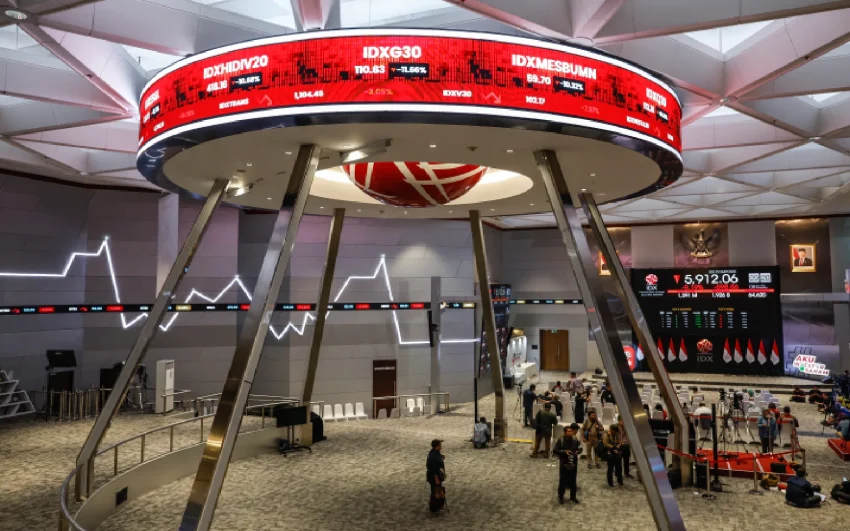
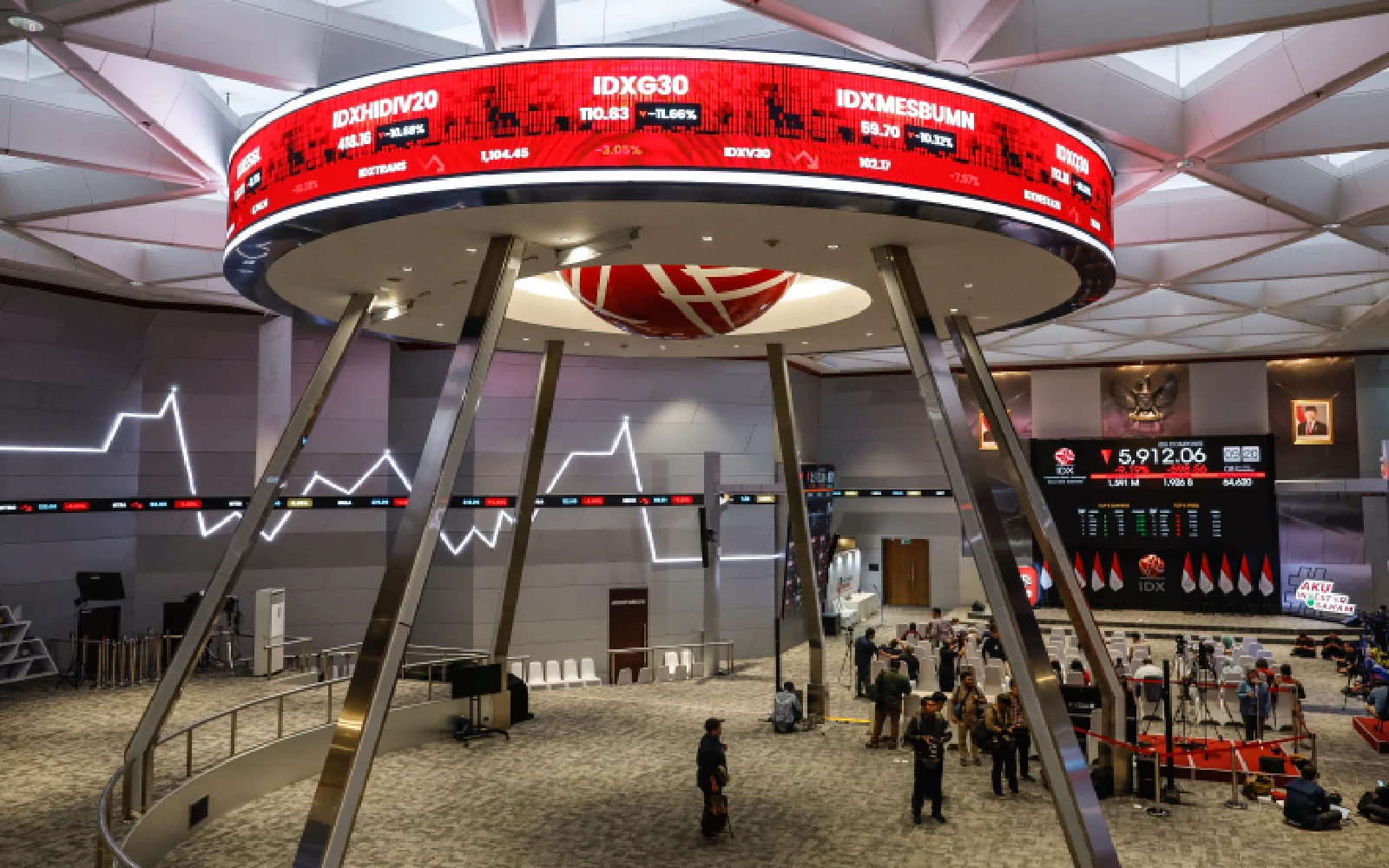
JAKARTA: Indonesian stocks plunged to their lowest level in five years and the rupiah hit a record low in another stark reminder of the multi-faceted challenges confronting Southeast Asia’s biggest economy.
The benchmark Jakarta Composite Index tumbled as much as 5.2% to the lowest since May 2021. Materials led the declines, with a subgauge of the sector plummeting more than 10%. The rupiah weakened 0.5% against the dollar, leading losses in Asia, as Brent crude prices advanced for a third day.
The selloff highlighted a confluence of concerns weighing on investor sentiment. Elevated oil prices are fueling worries about fiscal and external balances, while fears of greater state intervention in the commodities sector and any fallout from a potentially adverse MSCI Inc. reclassification have spooked global funds. Down about 32% in 2026, the JCI is already the worst performer this year among more than 90 global equity indexes tracked by Bloomberg.
“Investors remain cautious amid lingering concerns over Indonesia’s fiscal trajectory, speculation around a potential sovereign rating downgrade, and continued rupiah weakness,” said Mohit Mirpuri, a partner at SGMC Capital Pte. “While valuations are becoming increasingly attractive, investors are looking for a positive catalyst whether in the form of policy clarity, rating stability, stronger capital inflows, or a more constructive MSCI review to restore confidence.”
The latest slump came after data on Tuesday showed Indonesia’s trade surplus nearly vanished in April as soaring prices for imported oil and gas outpaced export gains. Consumer prices rose 3.08% in May from a year earlier, exceeding the median estimate in a Bloomberg survey of economists and moving further above the midpoint of Bank Indonesia’s 1.5%-3.5% target.
The rupiah has depreciated around 7% against the dollar this year, the worst performance among global emerging-market currencies tracked by Bloomberg. The nation’s foreign-exchange reserves fell in April to the lowest in nearly two years as the central bank stepped up intervention to defend the rupiah.
Falling reserves have increased the risk of credit rating downgrades, with Fitch Ratings and Moody’s Ratings already having cut their outlooks this year.
In contrast to the weakness in equities and the rupiah, Indonesia’s sovereign bonds gained on Wednesday. The yield on 10-year debt was down 8 basis points at 6.68%.
Concerns that Indonesia’s credit rating and outlook “might be downgraded due to higher risk of a widening fiscal deficit” are weighing on stocks, said Henry Wibowo, a former JPMorgan Chase & Co. strategist who co-founded Alphagate Capital in Jakarta. Weakness in the rupiah, which is approaching the 18,000-per dollar mark, is also adding to that pressure, he added.
In recent weeks, worries about tighter government control of the key commodities sector have also sapped sentiment. President Prabowo Subianto announced in May that the administration would take direct control of exports of some of Indonesia’s most important commodities.
A subgauge of stocks in the basic materials sector plunged nearly 11% on Wednesday. It slumped almost 23% last month.
Meanwhile, Indonesian prosecutors on Wednesday searched the headquarters of the agency that oversees Prabowo’s flagship free meals programme. The search came a day after the leader replaced agency chief Dadan Hindayana and two deputies, citing concerns over food quality control and organizational discipline.
The Jakarta Composite Index has fallen every month this year and is on track for the biggest annual loss since 2008. The selloff has also seen Indonesia cede its title as Southeast Asia’s biggest stock market to Singapore after a five-year reign. Global funds have withdrawn more than US$3.2 billion from local stocks this year.
MSCI last month cut some stocks linked to the country’s richest billionaires from its indexes due to concern over concentrated ownership. The move followed investor complaints about the accessibility of some stocks for trading, which had prompted the index compiler to warn in January of a possible downgrade to frontier status.
“The JCI remains in a broader downtrend and has yet to show any valid signs of a trend reversal,” said Herditya Wicaksana, an analyst at MNC Sekuritas in Jakarta.