
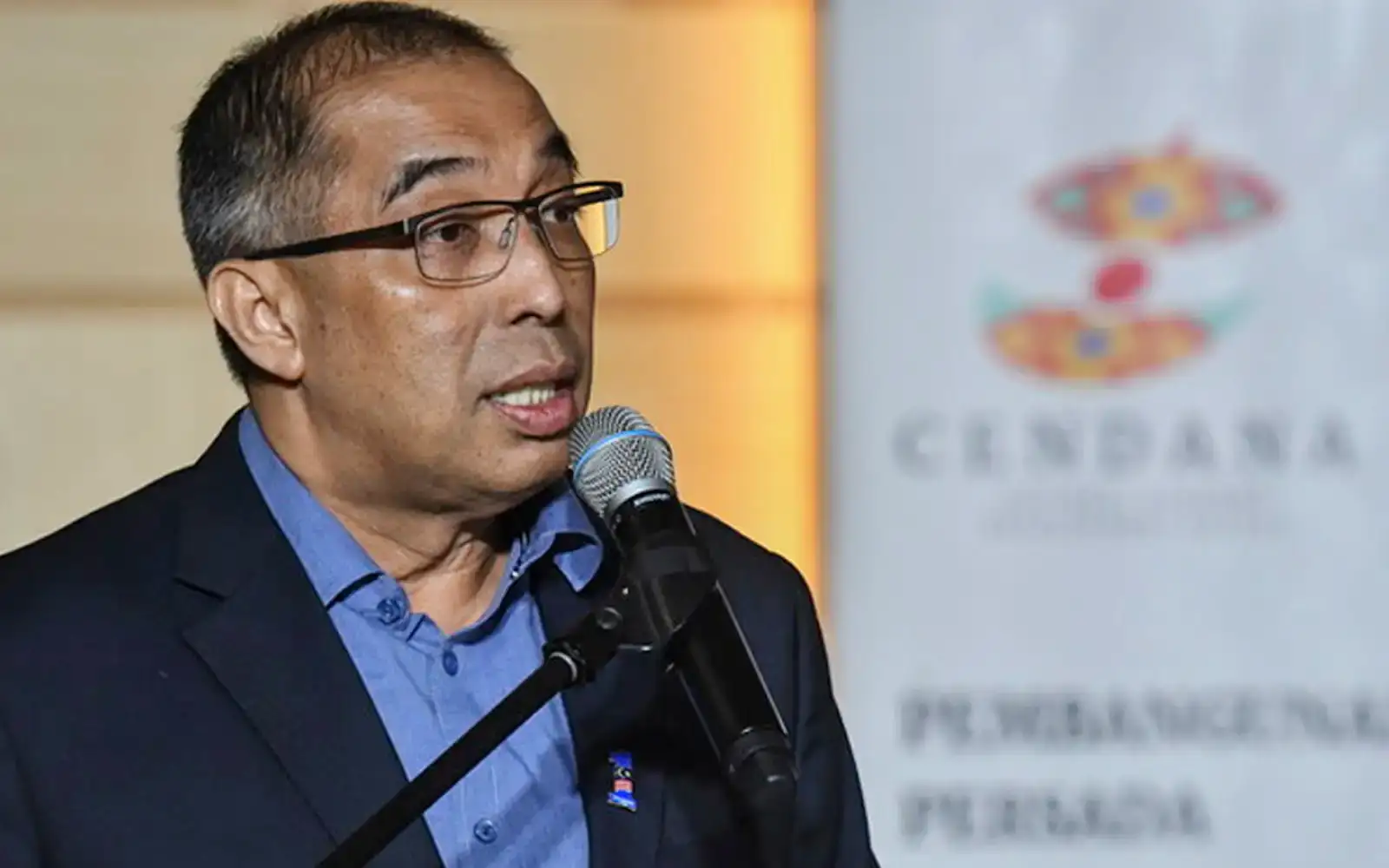
PETALING JAYA: Malaysian politics has increasingly shifted towards the formation of coalition governments after elections, former Sabah chief minister Salleh Said Keruak said today.
Salleh said the nation moved towards this model after a more fragmented political landscape emerged in the wake of the 15th general election, in which no coalition secured a majority on its own.
“As a result, parties negotiated after the election and formed the unity government comprising Pakatan Harapan, Barisan Nasional, Gabungan Parti Sarawak, Gabungan Rakyat Sabah and several other parties.
“Coalition politics remains a reality in many democracies. The difference today is not whether coalitions exist, but whether they are formed before or after an election. Malaysia has increasingly moved from the first model to the second,” he said in a Facebook post.
Salleh noted that for decades, coalitions were formed before polling day, with parties agreeing to work together, avoid contesting the same seats, and campaign on a common platform and manifesto.
“Malaysia followed this model for decades through the Alliance Party and later BN. From the 1950s until 2018, coalition politics was largely settled before elections,” he said.
Salleh, who is also the Sabah Umno treasurer, previously rejected the argument that BN’s decision to contest on its own in the coming Johor election was inconsistent with its federal cooperation with PH.
He said BN’s current cooperation in Putrajaya with PH was because the political reality required a governing majority, but that BN believes it has sufficient strength in Johor to seek a mandate on its own without relying on PH.
He said Sabah had seen a similar situation in the 2025 state polls: BN, GRS and Warisan competed against each other, after which BN chose to join the state government with GRS, while Warisan remained in the opposition.
“Ultimately, politics is shaped by electoral mandates and legislative numbers. Parties may compete during elections but work together afterwards if circumstances require it.
“The key objective is to ensure political stability and effective governance,” he said.