
Perikatan Nasional election director Sanusi Nor’s recent remarks at a ceramah that Malays “only have Tanah Melayu” have reignited debate over Malaysia’s national identity.
His statement is reminiscent of the speech delivered by former Pasir Salak MP Tajuddin Abdul Rahman in the Dewan Rakyat in July 2018, when he asserted that Malaysia is “Malay land”.
Both politicians would do well to reflect on the remarks made by former minister Rafidah Aziz during a public lecture at Universiti Malaya in May 2025.
She reminded Malays that they no longer lived in Tanah Melayu or the Federation of Malaya, but in Malaysia, a sovereign, multiracial nation established in 1963.
As she observed: “I know, politically, some people don’t want that. ‘I’m a Malay first,’ they say. Where is your country? Tanah Melayu is no more. It’s Malaysia now.”
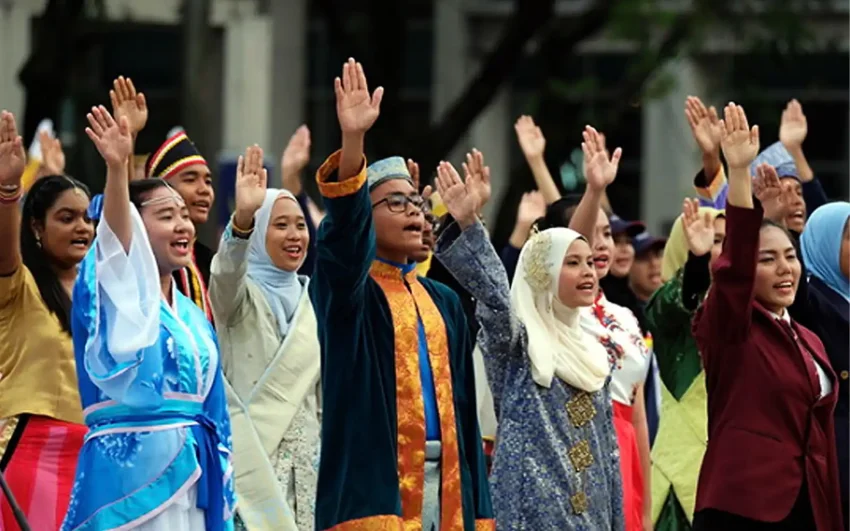
Rafidah’s remarks serve as a reminder that while the historical legacy of Tanah Melayu remains an important part of the nation’s heritage, Malaysia today is founded on a broader constitutional and political framework that embraces its diverse peoples.
Some Malay political leaders continue to rely on appeals to race- and religion-baiting to mobilise support within their electoral constituencies. While such rhetoric may yield short-term political gains, it often reinforces ethnic divisions and provokes negative reactions from other communities.
Race relations in Malaysia are unlikely to improve if identity politics continues to dominate public discourse and shape the nation’s political narrative.
Building a more cohesive and united Malaysia requires political leadership that emphasises shared citizenship, mutual respect, and common national interests rather than ethnic or religious differences.
Surprisingly, Barisan Nasional chairman Ahmad Zahid Hamidi publicly criticised Sanusi’s remarks, describing them as outdated and inappropriate for a multiracial nation.
Zahid, who is also the Umno president, cautioned against rhetoric that could inflame racial tensions, emphasising that Malaysia is a multicultural society.
Speaking at a programme with the Indian community on July 25, he remarked, “if you want to be friends, be sincere. Otherwise, just stay in Kedah and focus on governing the state.”
Given Umno’s long history of promoting “Ketuanan Melayu” (Malay supremacy) and the broader concept of Malay political hegemony, the contrasting statements by Sanusi and Zahid during their respective political campaigns can largely be understood as political rhetoric aimed at appealing to different audiences.
While such rhetoric may serve immediate electoral objectives, it also illustrates how issues of race and identity continue to be invoked as political tools.
The persistence of this approach risks reinforcing communal divisions and detracts from the broader task of fostering a more inclusive Malaysian national identity.
While identity politics often dominates political discourse and media headlines, far less attention is given to what the respective assemblymen intend to do, how they intend to improve the lives of their constituents, or policies and principles their parties advocate.
Electoral debates should focus on practical issues such as economic development, employment, education, healthcare, infrastructure and the cost of living. Instead, the persistent emphasis on race and religion often serves as a distraction from the real challenges facing ordinary Malaysians.
Communities are better served by leaders who offer credible solutions to improve their quality of life rather than divisive rhetoric that exploits ethnic and religious differences for short-term political gain.
The eradication of corruption is another critical issue that is seldom given prominence during political campaigns.
In light of revelations from the Tabung Haji royal commission of inquiry report, Armed Forces Fund Board (LTAT) financial irregularities, the Felda Global Ventures (FGV) case, and numerous other scandals, one would expect integrity, accountability, and good governance to be among the highest priorities of political discourse, alongside concerns about the rising cost of living.
These instances of alleged corruption have highlighted how ordinary Malaysians who entrusted their hard-earned savings to these institutions suffered losses while individuals entrusted with managing these organisations were often absolved of responsibility.
These cases point to the need for stronger institutional safeguards, greater transparency and political leadership committed to protecting public interests rather than allowing state-linked institutions to become vulnerable to political influence.
Invoking the “Tanah Melayu” narrative serves only to distract attention from the real issues confronting Malaysians today. At a time when the nation faces economic uncertainty, rising living costs, and an increasingly complex global environment, such rhetoric diverts public attention from the policies and solutions that truly matter.
Resorting to race-based politics suggests a lack of fresh ideas and meaningful solutions.
It is often a sign that an individual or political party has exhausted its political agenda and is attempting to revive support by appealing to ethnic emotions rather than addressing the concerns of ordinary Malaysians.
It is akin to scraping the bottom of the barrel in search of a controversial issue that might inflame sentiments among a particular segment of the population.
This is the year of our “Visit Malaysia 2026” campaign, not “Visit Tanah Melayu” year, and visitors will naturally look beyond our tourism attractions to understand the country through its news, public discourse, and social environment.
Against the backdrop of global uncertainties, including geopolitical tensions such as the US-Iran conflict and their potential impact on international and domestic economies, our leaders must focus on preparing Malaysians for the challenges ahead.
This is not a time for divisive politics or narrow communal agendas.
The views expressed are those of the writer and do not necessarily reflect those of FMT.