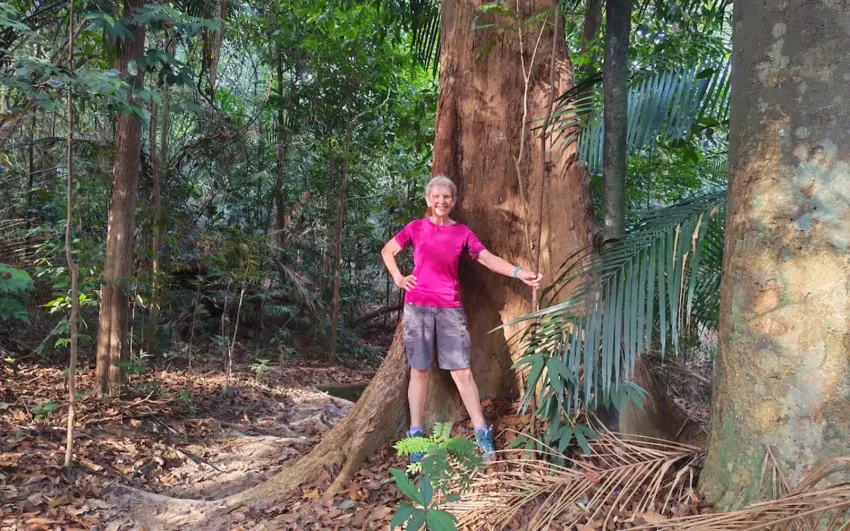

From Anne Munro-Kua
This isn’t a letter about gardening – although perhaps, in some ways, it is.
A garden flourishes when it has the right conditions. The gardener cannot force a flower to bloom but can enrich the soil, provide water and sunlight, and create an environment in which growth becomes possible.
The same principle may apply to ageing.
Three years ago, at 75, I was diagnosed with osteoporosis. The news shocked me. I had always considered myself healthy: I hiked, cycled, swam, practised yoga and paid close attention to nutrition.
Suddenly, I pictured myself becoming the stereotypical frail older woman – fearful of falling, increasingly dependent, and slowly retreating from life.
The specialist recommended medication to improve my bone density. When I asked about exercise and nutrition, he could offer little guidance – not because he was unwilling to help, but because such approaches appeared to fall outside the scope of his training.
Medication can play an important role in reducing fracture risk, and it may be the right choice for many people. But I wanted to understand what else I could do to strengthen not only my bones but my body as a whole.
My research led me to evidence supporting supervised resistance and impact training for post-menopausal women with low bone density. It reminded me of something profoundly hopeful: bones are living tissue and continue responding to appropriate physical loading, even later in life.
With professional guidance, I began weight training cautiously. I also focused on regular movement, adequate nutrition, balance, sleep and overall strength.
Eight months after my diagnosis, a scan showed that the bone density in my spine had improved enough to move from the osteoporosis range into osteopenia. I was delighted.
Yet my consultant remained concerned that I might fall. He was right to take that risk seriously: falls are a major cause of injury, disability and loss of independence among older adults.
Bone density alone, however, does not determine whether someone will fall. Medication may help protect the skeleton if a fall happens, but it does not necessarily strengthen muscles, improve balance or increase confidence in movement.
Those qualities must be cultivated.
Today, at 78, I intentionally walk at least 3km each day. I choose stairs over escalators, hike rocky trails, carry my shopping, and sometimes dance simply because I can.
During a hospital assessment involving walking, balance and chair-rise exercises, I was classified as “robust”. The physiotherapist explained that there was no higher category.
That made me pause. Why should robustness in later life be considered exceptional rather than something we actively help older people attain?
Frailty is not always an inevitable consequence of ageing. Research increasingly suggests it can be delayed and, in some cases, improved through exercise, nutrition, social engagement and appropriate healthcare support.
Countries including Singapore, Japan and South Korea are already investing in community programmes that promote strength, balance, movement and connection before serious frailty develops. Malaysia should do the same.
Imagine if every person diagnosed with osteoporosis were offered not only medication where appropriate, but also access to evidence-based strength training, nutritional advice and balance coaching.
Imagine if clinics and hospitals regularly provided affordable group physiotherapy sessions for older adults.
Imagine if the goal of ageing were not merely to avoid illness, but to preserve the ability to do what matters.
Our healthcare system is effective at treating visible problems – but it must also become better at cultivating the conditions that help people remain active, capable and independent.
My husband planted our garden 40 years ago in the hope of attracting birds; today, more than 30 species visit it. That transformation happened gradually through care, patience and stewardship.
Perhaps our bodies are no different. At 78, I no longer define myself as a frail woman with osteoporosis: I see myself as someone still growing, learning and building strength.
An elderflower, perhaps – still blooming.
Anne Munro-Kua is a social scientist, community coach and a reader of FMT.
The views expressed are those of the writer and do not necessarily reflect those of FMT.