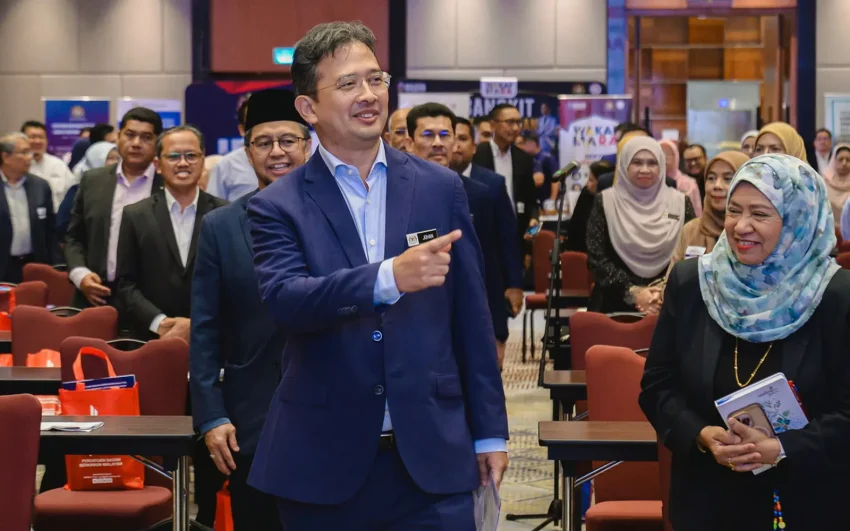

PUTRAJAYA: The finance ministry (MoF) has detected irregularities in government tender procurement processes through the practice of tailoring tender specifications to favour specific vendors, said Treasury secretary-general Johan Mahmood Merican.
He added there have been incidents showing that while the tender process initially appeared competitive, evaluations of financial and technical aspects ultimately left only one qualified company because the set specifications were skewed towards a particular vendor.
He stated that Prime Minister Anwar Ibrahim, who is also the finance minister, had halted the practice of direct negotiations for government tender procurements.
“Now, almost all procurements are executed via tender. However, as we all know, Malaysians can be quite creative when all tenders are implemented.
“We are seeing many incidents where the tender looks good on paper, but after financial and technical evaluations, only one bidder remains because all the specifications were tailored towards a single vendor,” he said during his opening speech at the 2026 Malaysian Statutory Bodies Conference here today.
Also present were public services department deputy director-general (development) Bakhari Ismail and entrepreneur development and cooperatives ministry secretary-general Khairul Dzaimee Daud.
Others in attendance included Universiti Teknologi Mara vice-chancellor and president of the Association of Statutory Bodies of Malaysia (PBBM) Shahrin Sahib @ Sahibuddin, and Malaysian Palm Oil Board (MPOB) director-general Ahmad Parveez Ghulam Kadir.
Elaborating further, Johan said this issue has been detected repeatedly across several agencies, and the prime minister is taking a firm stance against these occurrences.
“I wouldn’t mention this if it had only happened once. The MoF tracks these matters, and this is happening across various agencies, including the MoF itself. On this issue, the prime minister is taking a strict stand as part of the agenda to reform government procurement governance,” he said.
Johan said the government has passed the Government Procurement Bill 2025, which strengthens accountability and enforcement actions.
“Previously, government procurement issues were treated merely as administrative matters; if someone had retired, no action could be taken against them. But now, with the Government Procurement Bill, even I am not safe after retirement.
“I could also face punitive action if I commit any irregularities in government procurement. That is among the approaches to enhance procurement regulations and governance,” he said.
Meanwhile, Johan noted that statutory bodies serve as key institutions within the country’s administrative and development landscape.
“The role they play involves not only delivering services to the people but also driving the nation’s economic development, innovation, education, investment, and social wellbeing,” he added.
Themed “Statutory Bodies & National Aspirations: Shaping the Future,” the conference – organised by PBBM in collaboration with MPOB and Mara – serves as a strategic platform to discuss the role of statutory bodies in supporting the national development agenda by strengthening governance, leadership, organisational transformation, public sector reform, and service digitalisation.